RSAC 2026: AI, Hiring Challenges & Cybersecurity Talent

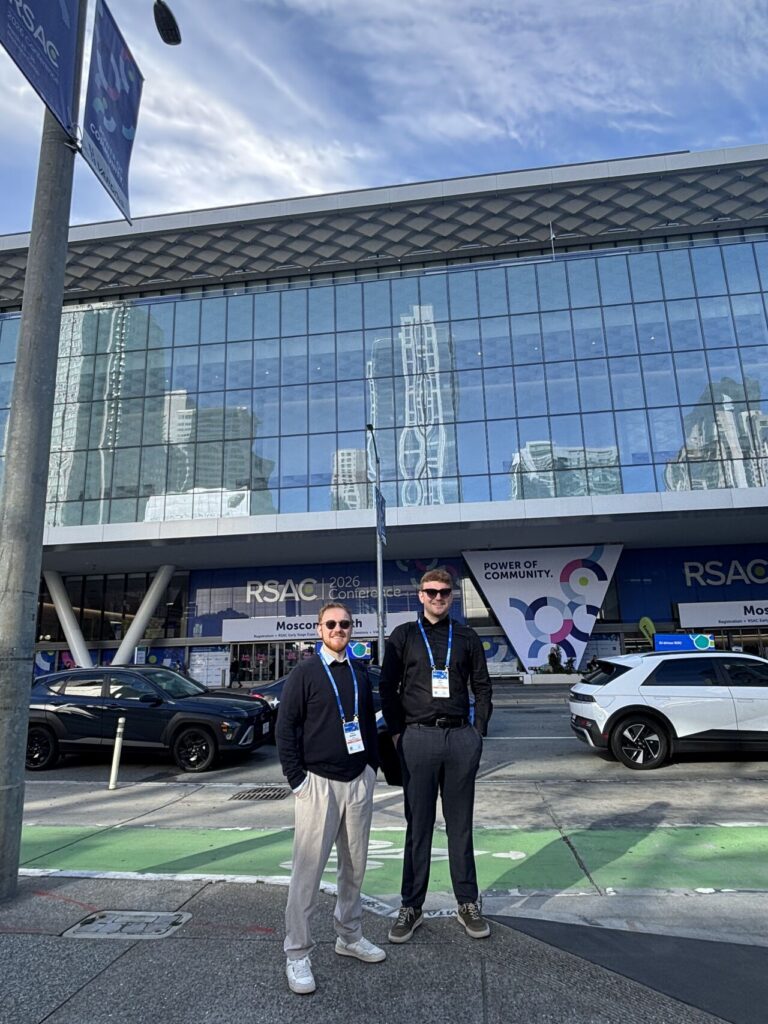
The RSA Conference 2026 once again brought together some of the brightest minds in cybersecurity.

And while the conversations spanned everything from product innovation to go-to-market strategy, one theme dominated across the board: AI is no longer emerging. It’s embedded.

]After speaking with industry leaders on the ground, Harry and Matt from neuco pulled together a few key reflections that are worth sharing.

AI is Reshaping the Hiring Landscape

From a recruitment perspective, AI is having a direct and immediate impact on hiring processes. Candidates are now able to apply for hundreds of roles in a matter of minutes. At the same time, AI tools are helping tailor and enhance CVs at scale.

The result?

  • A sharp increase in application volume
  • More noise in the screening process
  • Greater difficulty identifying genuinely relevant experience

For internal talent teams, this creates a clear challenge: how do you efficiently filter quality from quantity?

The Candidate Experience is Under Pressure

It’s not just employers feeling the strain; candidates are also navigating:

  • Overly complex and lengthy hiring processes
  • Delayed or non-existent feedback
  • Opportunistic or unclear job postings

When processes become bloated, communication suffers. And in a competitive market, that can quickly impact employer brand and candidate engagement.

AI in Cybersecurity: Moving Beyond the Hype

On the product side, the conversation around AI has matured. Rather than simply “using AI”, businesses are now focused on demonstrating tangible value.

For example:

  • AI-powered SOC tools that clearly quantify time saved
  • Solutions that directly link automation to customer outcomes
  • Platforms embedding AI to enhance, not replace, human decision-making

The shift is subtle but important. It’s no longer about having AI. It’s about what it actually delivers.

Talent Demand is Picking Up Again

One of the more positive takeaways from RSA? The hiring market is showing signs of recovery.

Over the past few months, there has been a noticeable uptick in hiring activity, particularly for:

  • Sales professionals on the US West Coast
  • Candidates with federal or public sector clearance
  • Highly specialised commercial roles

While challenges remain, there is a renewed sense of momentum across the market.

What Does This Mean Moving Forward?

If there’s one takeaway from RSA this year, it’s this: AI is accelerating everything – including the challenges.

For businesses, that means:

  • Rethinking hiring processes to manage scale and complexity
  • Being clearer and faster in candidate communication
  • Demonstrating real value in AI-driven solutions

For candidates:

  • Standing out is becoming harder, not easier
  • Authenticity and clarity matter more than ever

Final Thoughts from neuco

Events like RSA are a reminder that while technology evolves quickly, people remain at the centre of it all.

At neuco, we sit right in the middle of that intersection, helping businesses navigate talent challenges in a rapidly changing market.

If you’re hiring, scaling, or simply trying to make sense of where the market is heading, it’s a conversation worth having.

SATShow 2026 – Defence, Multi-Orbit Architectures & New Talent

A Market at an Inflexion Point

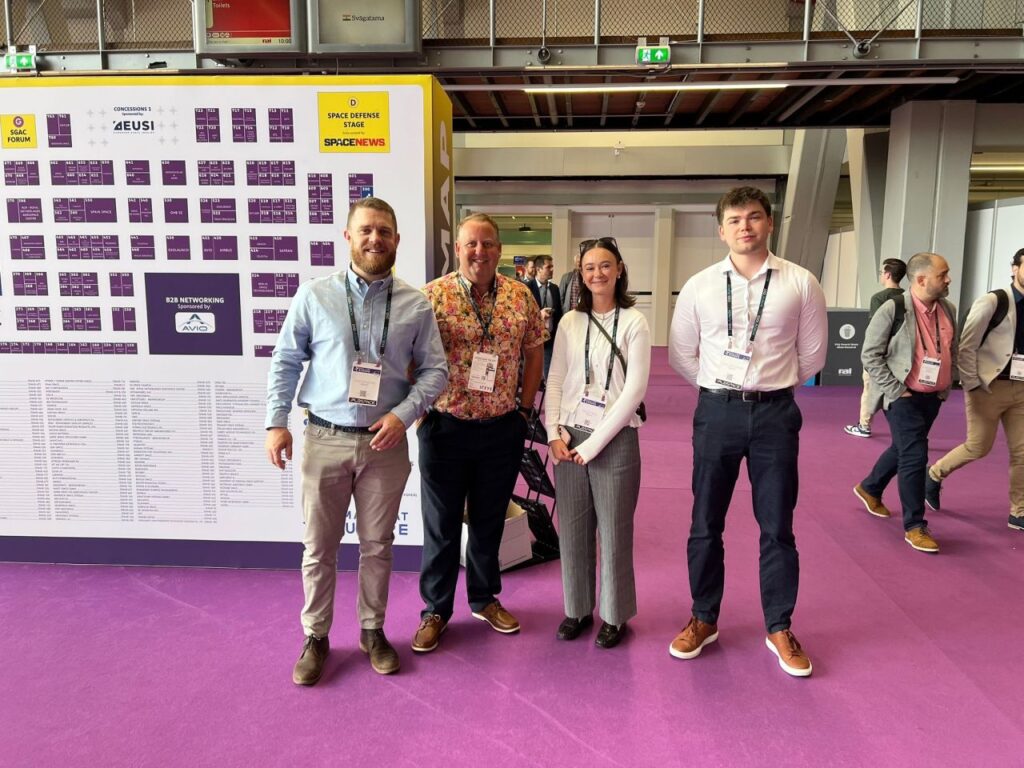
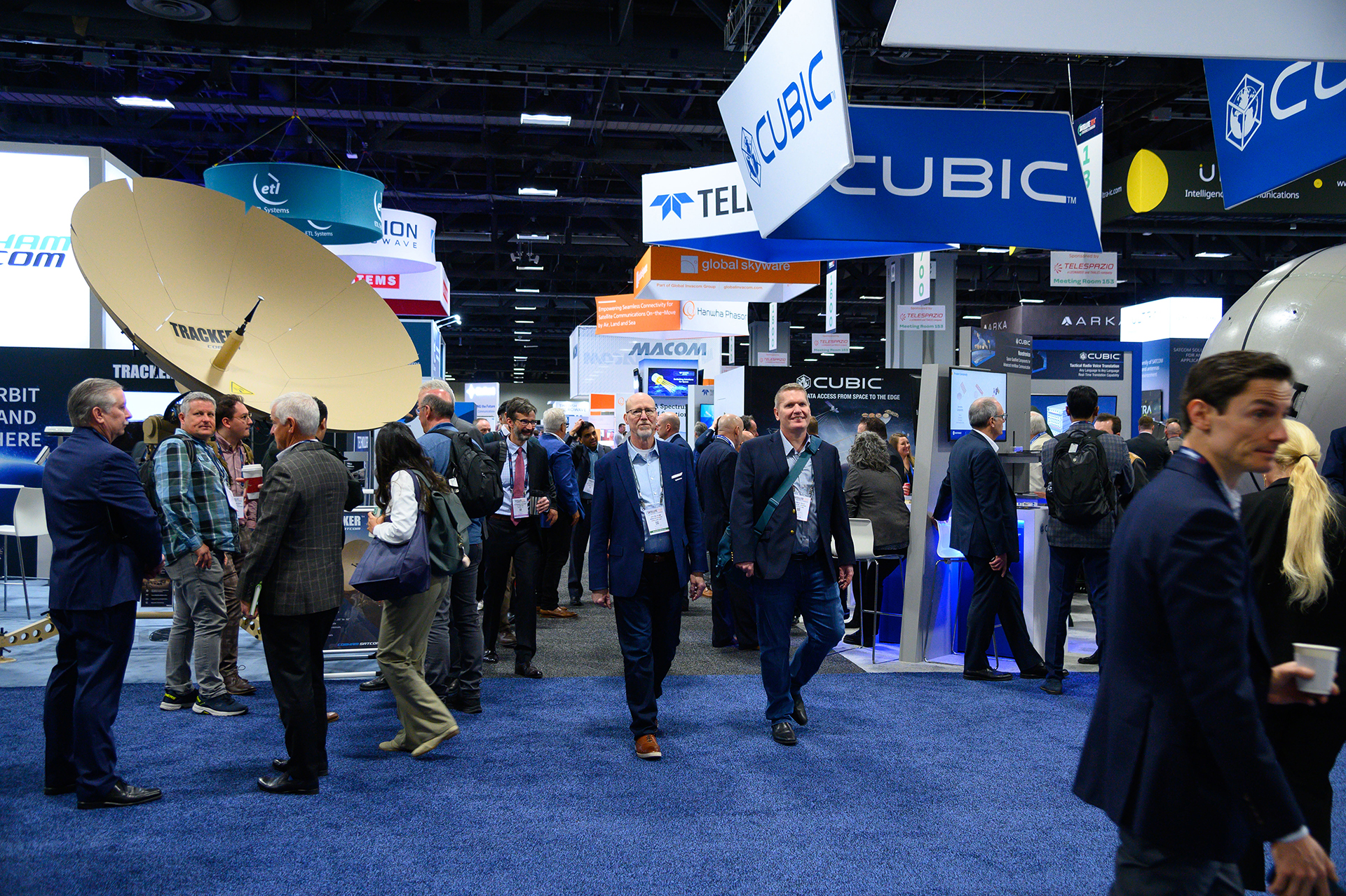
SATELLITE 2026 in Washington, D.C., has reinforced what many across the space and satellite ecosystem have been anticipating: the industry has entered a new phase of acceleration, shaped by geopolitical pressure, technological convergence, and the increasing strategic importance of space infrastructure.

Bringing together over 15,000 leaders across commercial, government, and military sectors, SATELLITE 2026 has made one thing clear: SATCOM is no longer a supporting capability; it is now mission-critical infrastructure underpinning global connectivity, security, and defence operations.

Government & Defence

One of the most defining themes across the week has been the central role of government and defence in shaping the satellite market.

What was once considered a parallel market is now firmly at the centre of industry strategy. Investment in secure, resilient, and sovereign satellite communications is accelerating rapidly, with governments increasingly relying on commercial operators to deliver capability at speed.

The concept of space as a contested domain has also taken centre stage. Conversations across GovMilSpace focused heavily on:

  • Space domain awareness
  • Cybersecurity in orbit
  • Intelligence, surveillance and reconnaissance
  • Secure communications for defence operations

Multi-Orbit Architectures Become the Standard

Multi-orbit is no longer a differentiator; it is the baseline. The integration of LEO, MEO, and GEO networks is now central to delivering:

  • Resilient connectivity
  • Lower latency communications
  • Greater global coverage
  • Redundancy across mission-critical networks

Industry leaders are increasingly focused on hybrid architectures that combine the strengths of each orbit, enabling seamless service delivery across commercial and defence use cases.

Sovereignty, Speed & Scalability

Across both commercial and defence discussions, three priorities are consistently emerging:

1. Sovereign Capability

Nations are prioritising control over their satellite infrastructure, accelerating demand for sovereign and dual-use systems.

2. Speed of Deployment

Procurement cycles are shortening, with governments leaning on commercial innovation to deliver capability faster than traditional acquisition models allow.

3. Scalable Infrastructure

Operators are investing in next-generation constellations designed to deliver higher capacity, lower latency, and cost efficiencies at scale.

A clear example of this shift is the growing number of partnerships between established operators and emerging space companies, combining software-defined payloads with high-power satellite platforms to drive performance and flexibility.

The Talent Challenge

While technology continues to evolve at a pace, one constraint remains consistent across every conversation: talent.

Demand for experienced professionals across:

  • Satellite engineering
  • Systems architecture
  • Cybersecurity
  • Government and defence programmes
  • Commercial leadership

Continues to significantly outpace supply.

The reality is clear: the companies that can attract, develop, and retain top talent will be the ones that define the next phase of the space economy.

A Talent Perspective: Hiring for a Converging Industry

From a hiring and talent standpoint, there is a fundamental shift in what organisations need:

  • Cross-domain expertise – professionals who understand both commercial SATCOM and defence requirements
  • Systems-level thinking – engineers and leaders capable of working across multi-orbit architectures
  • Speed and adaptability – talent that can operate in fast-moving, innovation-driven environments
  • Security-first mindset – particularly as cyber and space domain awareness become critical

For organisations looking to scale, the challenge is no longer just hiring talent—it is building teams that can navigate an increasingly complex and converged ecosystem.

Looking Ahead

The overarching theme is not just innovation – it is execution.

The technology is advancing. Investment is accelerating. Demand is clear.

But the organisations that will lead the market are those that can:

  • Translate strategy into operational capability
  • Build the right partnerships across commercial and defence sectors
  • Secure the talent required to deliver at scale

As the space economy continues to evolve, the next 3–5 years will be defined not by who has the best technology, but by who can execute most effectively.

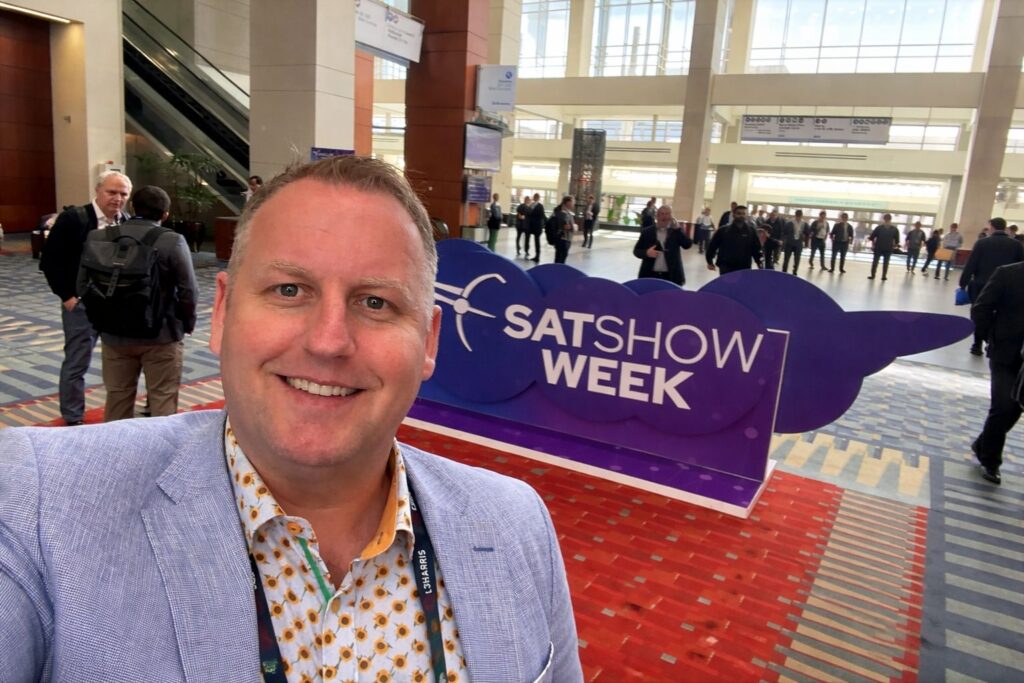
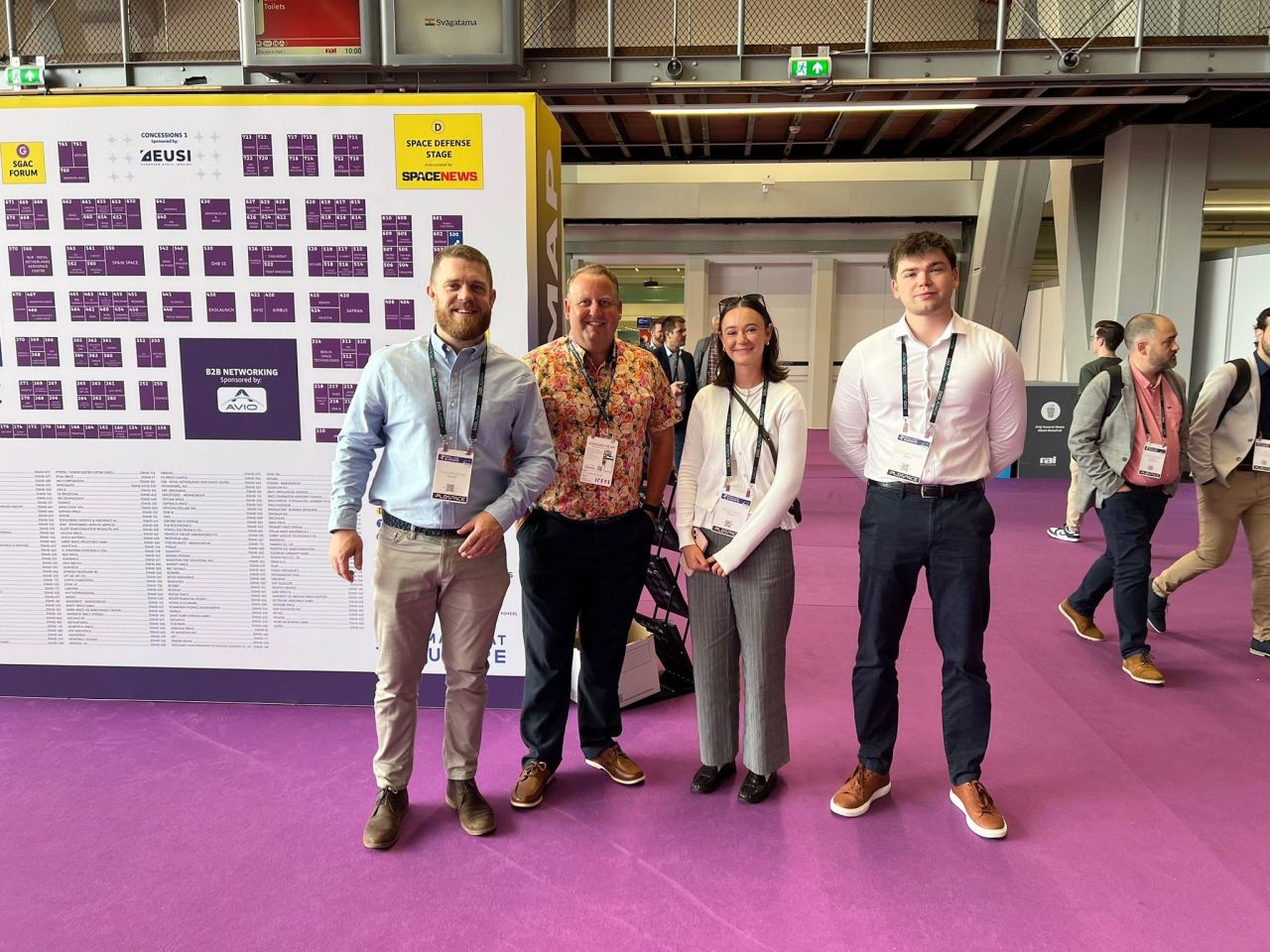
Laurie Scott, Director & Co-founder at neuco at the Satellite SHow DC 2026

About neuco

neuco is a global specialist recruitment partner supporting organisations across the satellite, space & defence, media & sports technology and cyber security sectors. With deep expertise in the space and satcom ecosystem, neuco partners with businesses to secure senior and executive talent across engineering, commercial, and leadership functions.

As the industry continues to converge across commercial and defence domains, neuco works closely with clients to navigate complex hiring challenges, identifying individuals who can deliver across multi-orbit architectures, mission-critical programmes, and rapidly evolving market demands.

With a focus on long-term partnerships and sector expertise, Neuco helps organisations build the teams required to scale, innovate, and lead in the next phase of the global space economy.

Defence and Space Industry Trends from MWC Barcelona 2026

Insights from neuco | Global Specialist Recruitment for Satellite, Space & Defence| MWC 2026

Mobile World Congress Barcelona 2026 highlighted a landmark shift across the global connectivity and space industries. Defence priorities are increasingly shaping investment, innovation and collaboration across satellite communications, secure networks and advanced space infrastructure, redefining what sovereign capability means in the 21st century.

As governments place greater emphasis on resilient satellite connectivity, secure communications and strategic space infrastructure, the intersection between defence, telecom and commercial space is becoming more pronounced than ever before.

Drawing on conversations across MWC 2026 and insights from neuco Director and Co-Founder Laurie Scott, here are five key trends shaping the future of the defence and space industries.

WMC Barcelona Conference Centre
Image from MWC Barcelona Website

1. Defence Investment Is Accelerating the Global Space Industry

One of the most prominent themes at MWC Barcelona 2026 was the growing influence of defence programmes on the global space sector. Governments across Europe and the Middle East are increasing investment in secure satellite communications, sovereign space infrastructure and defence-ready connectivity networks, prioritising greater independence in critical national communications systems.

This strategic shift is driving unprecedented collaboration between satellite operators, telecom providers, defence contractors and technology companies. Many space programmes are now being designed with dual-use capabilities, simultaneously supporting both commercial applications and high-demand defence requirements.

Secure satellite connectivity, resilient communications and sovereign space capability are now strategic priorities for many nations. This trend is expected to accelerate as geopolitical pressures intensify and nations compete for strategic advantage in LEO and beyond.

2. Non-Terrestrial Networks Are Becoming a Core Connectivity Layer

NTNs were among the most widely discussed topics at MWC 2026. NTN technologies integrate satellites, high-altitude platform stations and other space-based infrastructure with terrestrial mobile networks, enabling seamless global connectivity as mobile architectures evolve toward 6G.

The applications for NTN are rapidly expanding across a range of critical sectors:

  • Defence and secure government communications
  • Aviation and maritime connectivity
  • Remote and rural broadband coverage
  • Satellite-enabled IoT

Closely linked to NTN development is the growing strategic importance of PNT technologies. Reliable PNT systems are foundational to defence operations, aviation safety and critical infrastructure – further solidifying the role of space systems in the global connectivity ecosystem.

3. The Space Ecosystem Is Consolidating

A clear trend emerging across the space industry is the move towards greater consolidation and vertical integration. A notable development discussed at MWC was Indra’s acquisition of a majority stake in satellite operator Hispasat, reflecting a broader industry effort to build fully integrated, end-to-end space capabilities.

Organisations are increasingly looking to control more of the value chain, combining expertise across:

  • Satellite manufacturing and launch
  • Ground segment infrastructure
  • Satellite communications services
  • Space data and analytics

This consolidation allows organisations to deliver comprehensive satellite and connectivity solutions, becoming increasingly critical as demand for integrated space services grows and competition intensifies across commercial and defence markets.

4. Spectrum and Ground Infrastructure Are Evolving Into Strategic Platforms

Another emerging theme is a fundamental shift in infrastructure models. Rather than building dedicated ground infrastructure from scratch, many organisations are adopting platform-based approaches to spectrum access and ground segment operations, enabling greater scalability and flexibility.

Key developments in this area include:

  • Ground segment as a service
  • Shared satellite infrastructure models
  • Advanced spectrum management platforms

These models allow satellite operators and connectivity providers to scale more rapidly while reducing operational complexity. As satellite constellations expand and demand for always-on connectivity increases, infrastructure flexibility is fast becoming a key competitive differentiator in the global market.

5. Specialist Talent Demand in the Space and Defence Ecosystem Is Surging

Alongside technological innovation, MWC 2026 underscored a critical reality: the demand for experienced specialist talent in the defence and space sectors is accelerating rapidly. As investment flows into satellite programmes, secure communications networks and next-generation connectivity platforms, organisations worldwide are competing intensely for niche expertise across both commercial and technical disciplines.

Demand is particularly strong for leaders and specialists in:

  • Satellite systems engineering
  • Commercial strategy for space programmes
  • Defence and government partnerships
  • Advanced network architecture and connectivity platforms
  • NTN and 6G integration specialists

For companies scaling rapidly in this sector, access to experienced talent is becoming one of the most critical factors in successfully delivering complex space and defence programmes on time and on budget.

The Convergence of Defence, Telecom and Space: What It Means for the Industry

Perhaps the most important takeaway from MWC Barcelona 2026 is the accelerating convergence between defence, telecom and commercial space ecosystems. Satellite connectivity is no longer a niche capability; it is becoming a core layer of the global communications infrastructure, underpinning everything from defence operations to next-generation mobile networks and critical national infrastructure.

The organisations that succeed in this rapidly evolving landscape will be those that can:

  • Navigate complex global partnerships and regulatory environments
  • Integrate satellite and terrestrial connectivity seamlessly
  • Develop resilient, secure communications systems meeting defence-grade standards
  • Attract, retain and develop specialist talent in a highly competitive market

As the defence and space industries continue their rapid evolution, events like MWC Barcelona provide an invaluable snapshot of just how fast this sector is advancing, and where the next wave of investment, innovation and opportunity will emerge.


Looking for specialist talent in the defence, satellite or connectivity sector?

neuco’s expert consultants are embedded in your markets and know exactly where to find the best people, wherever in the world you need them.

Get in touch with the neuco team at neuco-group.com/contact to discuss your hiring needs or explore our current opportunities.

Sports Broadcasting Leadership & Technology: Insights from SVG Europe Football Summit 2026

By William Trenchard, Director & Co-founder of neucospecialist global recruiter in content, media and broadcast.

I spent Thursday, the 26th of February, at the SVG Europe Football Summit in Liverpool. It was a full house throughout the day, which in itself says something about the direction of our industry.

Sports broadcasting is not standing still. It is accelerating.

What struck me most, however, was not just the scale of technological change, but the emphasis on leadership and responsibility that underpins it.

Leadership in an AI-driven era

The SVGE Women workshop on developing female leaders in sports broadcasting was one of the most compelling sessions of the day.

There was a clear focus on practical leadership. The workshop discussed communication under pressure, handling bias with professionalism and building confidence in live environments where scrutiny is immediate and unforgiving. It was thoughtful, honest and refreshingly direct.

In a market preoccupied with AI, automation and remote workflows, it was a timely reminder that our industry remains fundamentally people-led.

Technology may optimise production, but it does not replace judgement. It does not build culture. It does not mentor the next generation.

The organisations that will thrive are those investing in both innovation and inclusive leadership. The two are not mutually exclusive. In fact, they are increasingly interdependent.

Photo from SVG Europe Football Summit 2026 Gallery

World Cup 2026: scale with accountability

The preview of the 2026 FIFA World Cup offered genuine insight into the operational complexity of delivering 104 matches across 16 host cities in three countries.

The scale is unprecedented.

What stood out was the deliberate focus on sustainability and efficiency, which included reducing travel demands, rethinking infrastructure, leveraging remote production and IP-based workflows to balance cost control with broadcast quality. 

Major tournaments often act as proving grounds. The workflows and production models implemented at World Cup level tend to filter into domestic leagues and international competitions shortly afterwards.

What we are witnessing is not simply bigger production, it is smarter production.

The evolving production model

Across the afternoon, recurring themes emerged:

  • Remote production is now embedded, not experimental
  • AI and data are reshaping storytelling and fan engagement
  • Expanded camera formats and immersive coverage are redefining match direction
  • Rights fragmentation continues to drive strategic and technical change

Yet behind every workflow diagram and data model sits one constant challenge: alignment.

Engineering, editorial, operations and commercial teams must operate cohesively. Scaling live coverage, deploying AI tools, and building direct-to-consumer platforms require integrated leadership and specialist talent.

From a neuco perspective, this is where the conversation becomes critical. As production environments become more complex, the demand for leaders who can bridge technology and operations is intensifying.

The value of proximity

Events like this also reinforce something more traditional. This industry remains deeply relational. 

Despite digital transformation, decisions are still influenced by trust, reputation and shared experience. Being in the room still matters.

The Summit offered a rare look behind the scenes of football broadcasting at the highest level. Not just the innovation, but the operational realities and leadership demands that make it possible.

For those of us operating in sports video and media broadcasting, it was a reminder that progress is not solely defined by new tools. It is defined by the calibre of people implementing them.

A genuinely insightful day, and one that reaffirmed how much thoughtful change is happening beneath the surface of what audiences see on match day.


neuco is a specialist global executive recruiter in the content, media and broadcast industry. We work with some of the most ambitious organisations in sports video, production and broadcast to find the leaders who make a difference.

Space Tech Expo Europe 2025: The NewSpace Sector Steps Up!

Space Tech Expo Europe 2025: The NewSpace Sector Steps Up!

Alistair Wilson, Senior Consultant – Satellite & NewSpace at neuco

As someone who’s recently joined the world of Satellite & NewSpace, attending my first Space Tech Expo in Bremen was a real eye-opener. I’ve heard from colleagues how impactful this event can be, but seeing the innovation, energy, and the sheer scale of opportunity was fantastic! t’s clear that Space Tech Expo Europe has earned its place as a cornerstone event for the global space community.

This blog post explores some of the main topics we saw at the show and how they are shaping the industry.

NewSpace Momentum Is High

There’s no doubt that the NewSpace sector is stepping up. From hardware to software, from LEO platforms to in-orbit servicing, what stood out most was just how many of the businesses in this space are now delivering, rather than just developing.

Startups and scale-ups came into the event with credibility and clarity. These aren’t speculative ventures anymore; they’re executing on real missions, building out ecosystems, and shaping commercial pathways.

There’s also a new wave of innovation being driven by companies like Dawn Aerospace, Okapi:Orbits, Reflex Aerospace, Gomspace, OQ Technology, Ramon.Space, Look up, Bright Ascension, LeanSpace, and ExoLaunch are solving some of the challenges of autonomy, command and control, and scalable software infrastructure. Across the board, confidence was high, and rightly so.

Smallsats Continue to Dominate

One of the clearest shifts is the dominance of smallsats in conversations across the floor. Smaller, faster-to-deploy platforms are becoming the foundation for new constellations, high-speed data transfer, scientific observation, and even defence applications.

The focus has moved from feasibility to functionality. The smallsat economy is now a major commercial force and a key driver in the sector’s expansion. And as manufacturing lead times shrink and more launch options emerge, the barrier to entry continues to drop.

Connectivity Is Now the Main Battleground

Connectivity was everywhere. Whether it was direct-to-device, hybrid constellations, or sovereign infrastructure, the narrative has changed from payloads and platforms to integration and accessibility.

What’s becoming clear is that companies winning in this space aren’t just building spacecraft; they’re building end-to-end services. With that comes new thinking around ground infrastructure, spectrum licensing, data processing, and commercial partnerships.

Sovereignty, Sustainability and Strategic Thinking

Several panels throughout the week addressed the need for clearer strategy and collaboration across Europe. With the upcoming ESA Ministerial Conference looming large, many industry voices expressed both concern and cautious optimism.

There’s a growing consensus around the importance of sovereignty, regulation, and responsibility. Quantum key distribution, on-orbit cybersecurity, faster licensing for European spaceports, and AI-driven mission oversight are no longer emerging issues; they’re strategic priorities.

Final Thoughts

Bremen was a brilliant introduction to the possibilities of NewSpace. There’s still a long way to go, but the direction of travel is clear: smarter, faster, more connected, and more commercially aware.

At neuco, we speak to the companies building this future every day, and our work in supporting their growth has never felt more relevant. If you’re hiring, scaling, or simply exploring what’s next, we’d love to hear from you.

Please email hello@neuco-group.com with any questions or queries you may have for us!

NAB Show New York 2025: Innovation, Integration and the Rise of the Creator Economy

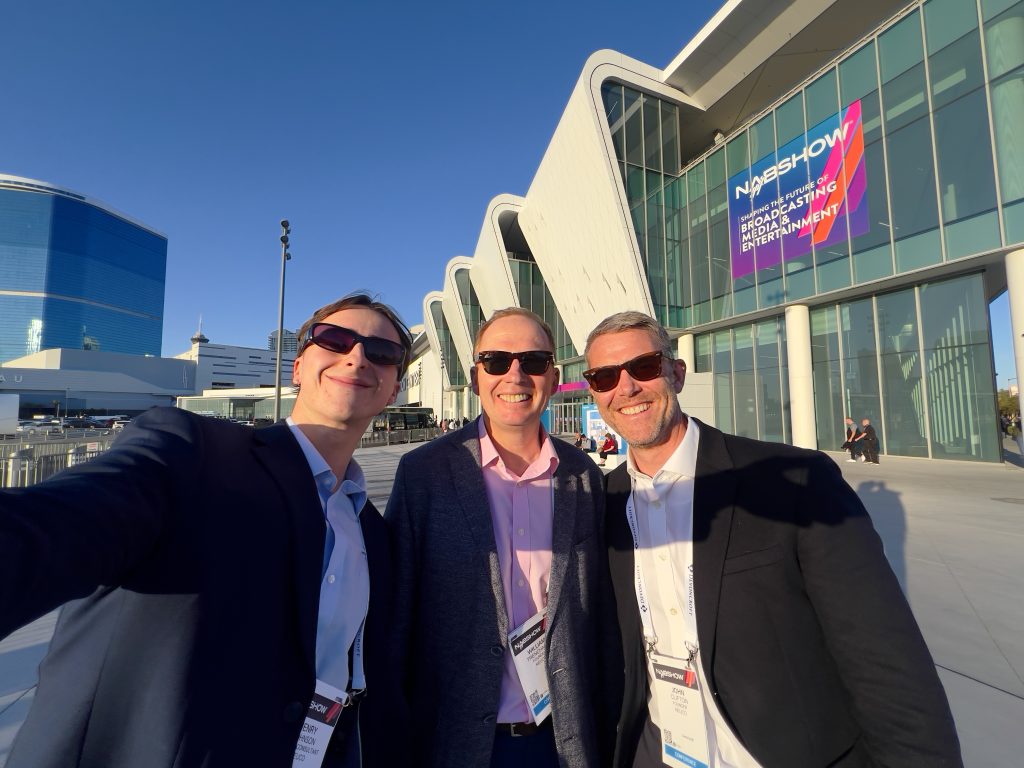
Last week, NAB Show New York 2025 brought together over 11,500 professionals from across the media, entertainment, and technology industries. With more than 260 exhibitors and sponsors, the event provided a detailed look at how the industry is evolving across content creation, delivery and monetisation.

Here are a few key takeaways:

Technology Innovation
Cloud-native infrastructure continues to be front and centre. Avid debuted its Content Core platform in the US, a new cloud-based system combining AI, automation and remote editing into a single workflow. Matrox introduced the Avio 2, a KVM extender using IPMX/ST 2110, supporting secure, low-latency 4K60 video workflows.

IP production and 4K technology also saw strong representation. KOKUSAI DENKI Electric launched a cost-efficient 4K studio camera, and Matrox demonstrated multiple new IPMX converters and encoders to support modern uncompressed and compressed workflows.

Backblaze also drew attention with their research into hidden costs in cloud storage, highlighting the need for pricing transparency in post-production environments.

Artificial Intelligence and Editorial Responsibility
AI-powered tools were everywhere, from workflow automation to metadata tagging and post-production editing. However, conversations led by CNN’s Brian Stelter, Oliver Darcy, and Sara Fischer stressed the importance of editorial integrity and audience trust in an AI-driven world. The consensus was that AI can support journalism, but it cannot replace sound editorial judgement.

Fan-Driven Sports Media
From Genius Sports to U.S. Soccer and TOGETHXR, a consistent message came through: sports broadcasting is now shaped as much by fans as by networks. Personalised, interactive content is now an expectation, not a luxury. Real-time data integration and social media engagement are becoming essential parts of the modern sports media toolkit.

Strategic Partnerships and Mergers & Acquisitions Activity

Key commercial announcements made headlines:

  • Imagine Communications confirmed its acquisition of Pixel Power to enhance its playout and graphics capabilities
  • Zixi and Heartland Video Systems partnered to improve IP-based live video contribution
  • Open Broadcast Systems and Tulix unveiled a full-service streaming workflow designed to bridge traditional encoding and OTT delivery

These partnerships are part of a wider industry trend towards scalable, integrated technology stacks.

The Creator Economy in Focus
Sessions dedicated to independent creators reflected just how much the creator economy is influencing media strategy. From TikTok livestream commerce to content monetisation panels, it was clear that creators are now an established force in the media ecosystem, not just disruptors.

What We Can Take From the Show!
From cloud-based production and IP-native infrastructure to AI tools and fan-first sports experiences, NAB New York 2025 showed just how quickly the industry is moving. Companies like Matrox, Zixi, Backblaze, Genius Sports, Blackmagic and Rohde & Schwarz played central roles in showing where things are heading.

How neuco Can Help

If your organisation is scaling in this space, or if you’re interested in discussing how to attract the right talent in a changing media and broadcast landscape, get in touch. We’d love to talk.

Contact us at: hello@neuco-group.com

WSBW 2025: A Month On – Innovation, Investment & Industry Momentum

As the dust settles from another unforgettable World Space Business Week in Paris, it’s clear that this year’s event was more than just a summit; it was a bold statement of where the global space and satellite industry is heading.

With over 1,600 senior executives, policymakers and innovators converging across five dynamic days, WSBW 2025 demonstrated a market that is accelerating rapidly, driven by sovereign strategies, groundbreaking tech, and ever-growing demand for secure, scalable connectivity.

The Industry’s New Pulse: Sovereignty, Speed & Software

From Day 1, the tone was set: agility and resilience are no longer optional; they’re essential. As governments double down on sovereign constellations and secure infrastructure, the distinction between commercial and defence has continued to blur. The ESA’s push for strategic acceleration, growing GCC investment, and Europe’s alignment of defence and space policy reflect this global momentum.

But it’s not just strategy that’s shifting. The infrastructure itself is transforming. Ground systems are now virtualised, software-defined “nervous systems”. On-board processing and AI-driven autonomy are making satellites smarter, and next-gen platforms like meoSphere, SES’s new MEO network, are embracing software-led design, with interoperability and flexibility at their core.

Constellations, Capital & Consolidation

Constellations are no longer just about coverage. They’re about AI enablement, edge processing, and seamless device integration. With Direct-to-Device (D2D) predicted to reach 300 million users by 2030, this is a market ready to explode.

However, capital is becoming more selective. While the sector continues to attract investment, only those with clear revenue pathways and dual-use relevance are thriving. M&A remains the dominant exit route, while IPO activity cautiously re-emerges.

Disruption in manufacturing was another major theme – from micro-factories to software-defined payloads. Yet, industry consensus leans toward consolidation, particularly in light of surging sovereign demand and strategic procurement cycles.

Regional Growth, Local Resilience

WSBW 2025 also spotlighted the shift from global dominance to regional self-determination. Operators across Asia, Africa, LATAM and the GCC are no longer just infrastructure players; they’re evolving into full-service providers. These shifts are underpinned by strong local partnerships, sovereign policies, and clear economic intent.

The rise of Africa’s space ambitions – including EO, capacity building, and ground infrastructure – was a standout storyline. Likewise, LATAM’s demand for defence and commercial sales leadership underlines the need for local talent and long-term commitment.

Talent Takeaways

At neuco, attending WSBW isn’t just about observing; it’s about connecting and identifying both immediate and future-facing talent needs. Key hiring trends and opportunities we observed include:

  • Leadership churn across major operators, creating fresh opportunities in C-level and commercial roles
  • Start-up scaling, especially in software-defined networks, EO, and cloud-based ground systems, fuelling demand for senior technical and growth leaders
  • Defence-driven sales growth in LATAM, Africa and Asia, with a strong appetite for localised expertise and multilingual commercial talent
  • Funding-led hiring, particularly within NewSpace, where companies are recruiting ahead of product rollouts and VC milestones

Despite structural shifts across the sector, the appetite for talent remains strong – especially for those who can bridge commercial acumen with technical understanding or navigate cross-border regulatory and partnership ecosystems.

WSBW has also reaffirmed the global challenge around senior succession. With many executive roles staying open for extended periods, organisations increasingly recognise the value of specialist search partners in accelerating time-to-hire and uncovering passive talent.

Looking Ahead

If one thing’s certain post-WSBW 2025, it’s that the space industry is no longer just about launch and infrastructure. It’s about platforms, partnerships, and people.

As sovereign ambitions grow, funding evolves, and innovation accelerates, so too does the need for adaptable, visionary leaders who can translate bold strategy into sustainable execution.

At neuco, we’re proud to support that journey.

Whether you’re scaling a start-up, reshaping a legacy player, or building sovereign capabilities, we’re here to help you find the talent to make it happen.

Looking to build your leadership team?
Let’s talk – the right talent is out there, and neuco knows where to find it.
Email us on hello@neuco-group.com

Reflections from NAB Show 2025 – Industry Optimism, Tariff Wobbles & Talent Trends

After our annual trip to NAB in Las Vegas, we’re back with full notebooks, sore feet, and plenty of thoughts about where the industry’s headed.

First off, the general vibe this year? Really positive. Compared to last year, there was a noticeable lift in energy. Almost everyone we met seemed genuinely pleased with the volume—and more importantly, the quality—of their customer meetings. Always a good sign, though of course the real test is what happens in the weeks and months after the show.

That said, visitor numbers were definitely lighter—Sunday in particular felt pretty quiet. Still, there was a decent geographic spread. We saw strong representation from EMEA and APAC, but overall, it felt like a more North American-focused event than in previous years. Perhaps a reflection of tighter travel budgets or evolving post-pandemic strategies, and likely a trend that will continue.

A recurring topic of conversation was tariffs—and how they might impact the broadcast and media tech space. Views varied wildly. Some were unfazed—“we’re a software business, we’ll be fine”—while others were genuinely concerned. Our view? The direct impact may be minimal for most, but it’s the hit to confidence and decision-making that could have the biggest effect. When investment slows, the whole industry feels it.

Encouragingly, there was still a lot of talk about growth. Despite the macroeconomic backdrop, companies are revising strategies, exploring new markets, and broadening their video capabilities. That’s not just good news—it’s essential for keeping momentum going. A clear direction of travel for many is moving into new areas of video beyond the traditional broadcasters, operators, and content owners. The Enterprise space came up repeatedly, and we fully expect more companies to expand their reach into that world.

Naturally, consolidation was a topic too. The vendor landscape continues to shift, and while that’s nothing new, it always brings both opportunity and uncertainty. In times like this, agility is key—for businesses and individuals alike.

And of course, there are the people. Everyone says it, but this industry really is full of brilliant individuals. Our meetings were full of insight, energy, and laughs. It’s one of the things we love most about what we do—because behind every innovation, every partnership, every deal, there’s a great team making it happen.

So, what does all this mean for hiring?

In times of change, growth, or uncertainty (and let’s face it, that’s most of the time!), having the right people in place is more important than ever. Whether you’re breaking into new markets, adapting product strategy, or preparing for shifts in customer behaviour, success hinges on your team.

Two of the biggest hiring trends we’re seeing right now:

1. People from outside the industry making an impact – Sometimes a fresh approach is exactly what’s needed. Just look at the CEO panel at the Devoncroft Summit (held the day before the show opened), where 3 of the 4 panellists—Avid, Vizrt, and Dalet—had recently hired CEOs from outside the broadcast world.

2. Enterprise experience unlocking new markets – As vendors look beyond their traditional customer base, the Enterprise space is full of opportunity. But it’s a different beast. The buyer behaviour, expectations, and sales cycles can be completely different—so bringing in people who understand that world will be key to success.

The good news? We’re here to help. Whether you’re growing your team, reviewing your hiring strategy post-NAB, or just want to chat about how the market’s evolving, let’s talk.

We’re already looking forward to next year, but for now, it’s back to doing what we do best: helping amazing companies connect with amazing people.

Insights from SATELLITE 2025: How Defence, Digital Sovereignty and D2D Are Reshaping Space

After a packed few days in Washington D.C. for SATELLITE 2025, one thing is clear—the satellite industry isn’t just evolving, it’s accelerating.

From game-changing partnerships to geopolitical shifts, here’s a breakdown of the key themes I walked away with, based on what I saw at the show and ongoing industry coverage.

Direct-to-Device: No Longer a Concept:

One of the most talked-about shifts at SATELLITE 2025 was how far we’ve come from the days when satellite-to-smartphone connectivity was seen as a future possibility.

It’s now very much happening.

The recent SES and Intelsat investment into Lynk Global shows how serious operators are about building infrastructure that enables seamless, global mobile coverage—no matter how remote the location.

We’re entering a phase where direct-to-device (D2D) is moving from pilot programmes to commercial rollouts, backed by multi-orbit capability and operator collaboration. This convergence between terrestrial mobile and satellite networks is no longer experimental—it’s strategic.

For businesses, this means new services, new customers, and new challenges. And for hiring, there’s rising demand for people who can straddle the telco-satcom divide—those who understand network integration, device compatibility, and regulatory nuances.

Defence Gets a Reset: Europe’s Strategic Realignment:

One of the most significant undercurrents at the show—and echoed in recent policy discussions—was the increased urgency across Europe to rethink its approach to defence in space.

Driven by the realities of the war in Ukraine and shifting global alliances, the EU is taking tangible steps to invest in autonomous defence capabilities. Space is central to that. From secure communications to ISR (intelligence, surveillance, reconnaissance), satellites are no longer just commercial tools—they’re now strategic military assets.

What’s changing is the tone. Defence isn’t just about missiles and troops anymore. It’s about orbital infrastructure, resilient networks, and tech leadership.

As governments and agencies across Europe ramp up investment, there’s a noticeable trickle-down effect on hiring. We’re seeing greater demand for professionals who understand both the technical and policy side of dual-use technology, procurement cycles, and secure systems design.

Europe’s Satellite Push: Digital Sovereignty in Focus:

Alongside defence, another theme gaining traction is Europe’s move towards digital sovereignty—and satellites play a crucial role in that strategy.

With the EU pushing for more self-reliance in space-based communications and navigation, we’re seeing an acceleration of funding and programmes that aim to reduce dependence on non-European infrastructure. Whether that’s through next-gen satellite constellations or sovereign cloud networks, there’s a concerted effort to own more of the digital stack.

The strategic logic is clear: secure, resilient, and independent infrastructure is now viewed as essential to both economic competitiveness and national security.

This brings fresh energy—and budget—into Europe’s space tech ecosystem. From a talent perspective, it means more cross-border projects, more public-private collaboration, and more opportunities for those who understand how to navigate both commercial and institutional landscapes.

Final Thoughts:

If there was a single message from SATELLITE 2025, it’s this: collaboration is the new competition.

Whether it’s operators joining forces to enable global D2D, governments investing in space for defence and digital sovereignty, or startups partnering with legacy players to accelerate innovation—it’s a space where teamwork is becoming just as important as tech.

At neuco, we’re proud to work with organisations shaping this future. Whether you’re building the next constellation or scaling up for a major government programme, we’re here to help you find the talent that makes it happen.

If you’re facing hiring challenges—or looking for your next strategic hire—let’s talk.

MWC 2025 Round-Up: The Future of Connectivity Takes Shape

MWC 2025 showcased the transformative impact of 5G, IoT, and AI on enterprise connectivity, highlighting how Mobile Network Operators (MNOs) are accelerating 5G deployment to drive innovation across industries like manufacturing, healthcare, and smart cities. Discussions emphasised the role of standalone 5G, private networks, and network slicing in delivering ultra-reliable, low-latency connectivity tailored to enterprise needs.

Meanwhile, eSIM technology has reached a new level of maturity in IoT, enabling seamless global connectivity and simplifying device management. AI is also revolutionising telecom by optimising network performance, automating operations, and enhancing customer experiences. With significant investments in these technologies, 2025 promises to be a pivotal year for connectivity and digital transformation.

5G: MNOs Drive Deployment to Power Enterprise Innovation

By Alistair

As enterprises increasingly rely on advanced connectivity for digital transformation, MNOs are accelerating their 5G deployments to meet rising demand. Beyond consumer applications, 5G is becoming a critical enabler for industries such as manufacturing, healthcare, logistics, and smart cities.

MNOs are investing heavily in standalone (SA) 5G networks, private 5G solutions, and network slicing to deliver ultra-reliable, low-latency connectivity tailored to enterprise needs. These advancements unlock new possibilities, from real-time automation in factories to enhanced security in remote operations and seamless IoT integration.

By collaborating with cloud providers, system integrators, and enterprise partners, MNOs are positioning 5G as the foundation for the next generation of business applications. As deployments expand, enterprises can expect greater flexibility, improved network performance, and new revenue-generating opportunities powered by 5G connectivity.

IoT & eSIM: A Seamless Future for Connectivity

By Abbie

eSIM technology is rapidly transforming the IoT landscape, driving unprecedented growth in connected devices across industries. As IoT adoption reaches new heights, the flexibility and scalability of eSIM are proving essential for seamless global deployments, reducing logistical challenges, and enabling dynamic network switching.

From smart cities to industrial automation, eSIM is unlocking new possibilities by simplifying device management and enhancing security. The ability to provision and update connectivity remotely is a game-changer for enterprises, ensuring resilience and adaptability in an increasingly digital world.

With major players expanding eSIM capabilities and infrastructure, 2025 is set to be a defining year for IoT connectivity. As networks evolve and integration deepens, the future of a truly interconnected ecosystem is closer than ever.

AI: The Catalyst for Intelligent Connectivity

By Laurie

It’s impossible to ignore the impact of artificial intelligence on the telecom industry. As networks become more complex and data volumes skyrocket, AI is proving to be a game-changer in optimising performance, automating operations, and enhancing customer experiences.

While AI buzz can sometimes feel excessive, its real-world applications in predictive maintenance, energy efficiency, and autonomous network management are driving tangible benefits. Combined with 5G and IoT, AI is shaping the future of intelligent connectivity, making networks more adaptive, resilient, and efficient.

With key industry players investing heavily in AI-driven solutions, it will be exciting to watch how these advancements unfold and reshape the industry.

Responsible Hiring: The Human Side of Connectivity

By Tom

As the technology landscape evolves, the importance of responsible hiring cannot be overstated. The messaging from MWC was clear—businesses are hiring with a keener eye on return on investment rather than growing headcount for the sake of growth. This more strategic and responsible approach to hiring is refreshing and aligns with the partnership-driven recruitment model that neuco champions.

Companies that invest in building diverse and skilled teams will be best positioned to drive innovation, improve decision-making, and foster long-term growth. As the industry moves towards automation and AI-powered solutions, balancing technological progress with responsible hiring practices will be key to sustainable success.

Final Thoughts

As we move deeper into 2025, these advancements will continue to reshape connectivity, bringing new opportunities for businesses and consumers. If MWC is anything to go by, the future is truly connected.