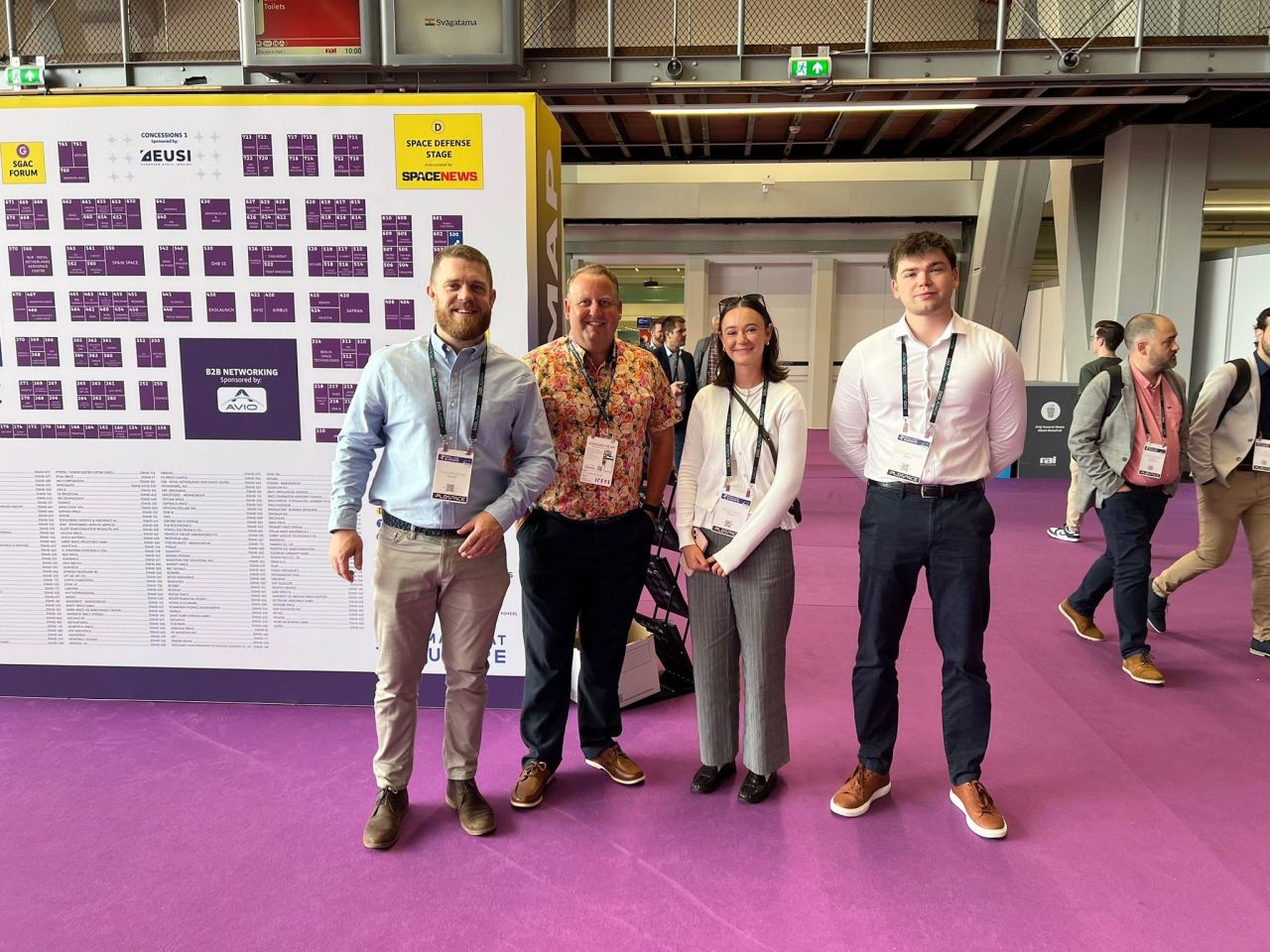

SATShow 2026 – Defence, Multi-Orbit Architectures & New Talent

A Market at an Inflexion Point

SATELLITE 2026 in Washington, D.C., has reinforced what many across the space and satellite ecosystem have been anticipating: the industry has entered a new phase of acceleration, shaped by geopolitical pressure, technological convergence, and the increasing strategic importance of space infrastructure.

Bringing together over 15,000 leaders across commercial, government, and military sectors, SATELLITE 2026 has made one thing clear: SATCOM is no longer a supporting capability; it is now mission-critical infrastructure underpinning global connectivity, security, and defence operations.

Government & Defence

One of the most defining themes across the week has been the central role of government and defence in shaping the satellite market.

What was once considered a parallel market is now firmly at the centre of industry strategy. Investment in secure, resilient, and sovereign satellite communications is accelerating rapidly, with governments increasingly relying on commercial operators to deliver capability at speed.

The concept of space as a contested domain has also taken centre stage. Conversations across GovMilSpace focused heavily on:

  • Space domain awareness
  • Cybersecurity in orbit
  • Intelligence, surveillance and reconnaissance
  • Secure communications for defence operations

Multi-Orbit Architectures Become the Standard

Multi-orbit is no longer a differentiator; it is the baseline. The integration of LEO, MEO, and GEO networks is now central to delivering:

  • Resilient connectivity
  • Lower latency communications
  • Greater global coverage
  • Redundancy across mission-critical networks

Industry leaders are increasingly focused on hybrid architectures that combine the strengths of each orbit, enabling seamless service delivery across commercial and defence use cases.

Sovereignty, Speed & Scalability

Across both commercial and defence discussions, three priorities are consistently emerging:

1. Sovereign Capability

Nations are prioritising control over their satellite infrastructure, accelerating demand for sovereign and dual-use systems.

2. Speed of Deployment

Procurement cycles are shortening, with governments leaning on commercial innovation to deliver capability faster than traditional acquisition models allow.

3. Scalable Infrastructure

Operators are investing in next-generation constellations designed to deliver higher capacity, lower latency, and cost efficiencies at scale.

A clear example of this shift is the growing number of partnerships between established operators and emerging space companies, combining software-defined payloads with high-power satellite platforms to drive performance and flexibility.

The Talent Challenge

While technology continues to evolve at a pace, one constraint remains consistent across every conversation: talent.

Demand for experienced professionals across:

  • Satellite engineering
  • Systems architecture
  • Cybersecurity
  • Government and defence programmes
  • Commercial leadership

Continues to significantly outpace supply.

The reality is clear: the companies that can attract, develop, and retain top talent will be the ones that define the next phase of the space economy.

A Talent Perspective: Hiring for a Converging Industry

From a hiring and talent standpoint, there is a fundamental shift in what organisations need:

  • Cross-domain expertise – professionals who understand both commercial SATCOM and defence requirements
  • Systems-level thinking – engineers and leaders capable of working across multi-orbit architectures
  • Speed and adaptability – talent that can operate in fast-moving, innovation-driven environments
  • Security-first mindset – particularly as cyber and space domain awareness become critical

For organisations looking to scale, the challenge is no longer just hiring talent—it is building teams that can navigate an increasingly complex and converged ecosystem.

Looking Ahead

The overarching theme is not just innovation – it is execution.

The technology is advancing. Investment is accelerating. Demand is clear.

But the organisations that will lead the market are those that can:

  • Translate strategy into operational capability
  • Build the right partnerships across commercial and defence sectors
  • Secure the talent required to deliver at scale

As the space economy continues to evolve, the next 3–5 years will be defined not by who has the best technology, but by who can execute most effectively.

Laurie Scott, Director & Co-founder at neuco at the Satellite SHow DC 2026

About neuco

neuco is a global specialist recruitment partner supporting organisations across the satellite, space & defence, media & sports technology and cyber security sectors. With deep expertise in the space and satcom ecosystem, neuco partners with businesses to secure senior and executive talent across engineering, commercial, and leadership functions.

As the industry continues to converge across commercial and defence domains, neuco works closely with clients to navigate complex hiring challenges, identifying individuals who can deliver across multi-orbit architectures, mission-critical programmes, and rapidly evolving market demands.

With a focus on long-term partnerships and sector expertise, Neuco helps organisations build the teams required to scale, innovate, and lead in the next phase of the global space economy.

Defence and Space Industry Trends from MWC Barcelona 2026

Insights from neuco | Global Specialist Recruitment for Satellite, Space & Defence| MWC 2026

Mobile World Congress Barcelona 2026 highlighted a landmark shift across the global connectivity and space industries. Defence priorities are increasingly shaping investment, innovation and collaboration across satellite communications, secure networks and advanced space infrastructure, redefining what sovereign capability means in the 21st century.

As governments place greater emphasis on resilient satellite connectivity, secure communications and strategic space infrastructure, the intersection between defence, telecom and commercial space is becoming more pronounced than ever before.

Drawing on conversations across MWC 2026 and insights from neuco Director and Co-Founder Laurie Scott, here are five key trends shaping the future of the defence and space industries.

WMC Barcelona Conference Centre
Image from MWC Barcelona Website

1. Defence Investment Is Accelerating the Global Space Industry

One of the most prominent themes at MWC Barcelona 2026 was the growing influence of defence programmes on the global space sector. Governments across Europe and the Middle East are increasing investment in secure satellite communications, sovereign space infrastructure and defence-ready connectivity networks, prioritising greater independence in critical national communications systems.

This strategic shift is driving unprecedented collaboration between satellite operators, telecom providers, defence contractors and technology companies. Many space programmes are now being designed with dual-use capabilities, simultaneously supporting both commercial applications and high-demand defence requirements.

Secure satellite connectivity, resilient communications and sovereign space capability are now strategic priorities for many nations. This trend is expected to accelerate as geopolitical pressures intensify and nations compete for strategic advantage in LEO and beyond.

2. Non-Terrestrial Networks Are Becoming a Core Connectivity Layer

NTNs were among the most widely discussed topics at MWC 2026. NTN technologies integrate satellites, high-altitude platform stations and other space-based infrastructure with terrestrial mobile networks, enabling seamless global connectivity as mobile architectures evolve toward 6G.

The applications for NTN are rapidly expanding across a range of critical sectors:

  • Defence and secure government communications
  • Aviation and maritime connectivity
  • Remote and rural broadband coverage
  • Satellite-enabled IoT

Closely linked to NTN development is the growing strategic importance of PNT technologies. Reliable PNT systems are foundational to defence operations, aviation safety and critical infrastructure – further solidifying the role of space systems in the global connectivity ecosystem.

3. The Space Ecosystem Is Consolidating

A clear trend emerging across the space industry is the move towards greater consolidation and vertical integration. A notable development discussed at MWC was Indra’s acquisition of a majority stake in satellite operator Hispasat, reflecting a broader industry effort to build fully integrated, end-to-end space capabilities.

Organisations are increasingly looking to control more of the value chain, combining expertise across:

  • Satellite manufacturing and launch
  • Ground segment infrastructure
  • Satellite communications services
  • Space data and analytics

This consolidation allows organisations to deliver comprehensive satellite and connectivity solutions, becoming increasingly critical as demand for integrated space services grows and competition intensifies across commercial and defence markets.

4. Spectrum and Ground Infrastructure Are Evolving Into Strategic Platforms

Another emerging theme is a fundamental shift in infrastructure models. Rather than building dedicated ground infrastructure from scratch, many organisations are adopting platform-based approaches to spectrum access and ground segment operations, enabling greater scalability and flexibility.

Key developments in this area include:

  • Ground segment as a service
  • Shared satellite infrastructure models
  • Advanced spectrum management platforms

These models allow satellite operators and connectivity providers to scale more rapidly while reducing operational complexity. As satellite constellations expand and demand for always-on connectivity increases, infrastructure flexibility is fast becoming a key competitive differentiator in the global market.

5. Specialist Talent Demand in the Space and Defence Ecosystem Is Surging

Alongside technological innovation, MWC 2026 underscored a critical reality: the demand for experienced specialist talent in the defence and space sectors is accelerating rapidly. As investment flows into satellite programmes, secure communications networks and next-generation connectivity platforms, organisations worldwide are competing intensely for niche expertise across both commercial and technical disciplines.

Demand is particularly strong for leaders and specialists in:

  • Satellite systems engineering
  • Commercial strategy for space programmes
  • Defence and government partnerships
  • Advanced network architecture and connectivity platforms
  • NTN and 6G integration specialists

For companies scaling rapidly in this sector, access to experienced talent is becoming one of the most critical factors in successfully delivering complex space and defence programmes on time and on budget.

The Convergence of Defence, Telecom and Space: What It Means for the Industry

Perhaps the most important takeaway from MWC Barcelona 2026 is the accelerating convergence between defence, telecom and commercial space ecosystems. Satellite connectivity is no longer a niche capability; it is becoming a core layer of the global communications infrastructure, underpinning everything from defence operations to next-generation mobile networks and critical national infrastructure.

The organisations that succeed in this rapidly evolving landscape will be those that can:

  • Navigate complex global partnerships and regulatory environments
  • Integrate satellite and terrestrial connectivity seamlessly
  • Develop resilient, secure communications systems meeting defence-grade standards
  • Attract, retain and develop specialist talent in a highly competitive market

As the defence and space industries continue their rapid evolution, events like MWC Barcelona provide an invaluable snapshot of just how fast this sector is advancing, and where the next wave of investment, innovation and opportunity will emerge.


Looking for specialist talent in the defence, satellite or connectivity sector?

neuco’s expert consultants are embedded in your markets and know exactly where to find the best people, wherever in the world you need them.

Get in touch with the neuco team at neuco-group.com/contact to discuss your hiring needs or explore our current opportunities.

Space Tech Expo Europe 2025: The NewSpace Sector Steps Up!

Space Tech Expo Europe 2025: The NewSpace Sector Steps Up!

Alistair Wilson, Senior Consultant – Satellite & NewSpace at neuco

As someone who’s recently joined the world of Satellite & NewSpace, attending my first Space Tech Expo in Bremen was a real eye-opener. I’ve heard from colleagues how impactful this event can be, but seeing the innovation, energy, and the sheer scale of opportunity was fantastic! t’s clear that Space Tech Expo Europe has earned its place as a cornerstone event for the global space community.

This blog post explores some of the main topics we saw at the show and how they are shaping the industry.

NewSpace Momentum Is High

There’s no doubt that the NewSpace sector is stepping up. From hardware to software, from LEO platforms to in-orbit servicing, what stood out most was just how many of the businesses in this space are now delivering, rather than just developing.

Startups and scale-ups came into the event with credibility and clarity. These aren’t speculative ventures anymore; they’re executing on real missions, building out ecosystems, and shaping commercial pathways.

There’s also a new wave of innovation being driven by companies like Dawn Aerospace, Okapi:Orbits, Reflex Aerospace, Gomspace, OQ Technology, Ramon.Space, Look up, Bright Ascension, LeanSpace, and ExoLaunch are solving some of the challenges of autonomy, command and control, and scalable software infrastructure. Across the board, confidence was high, and rightly so.

Smallsats Continue to Dominate

One of the clearest shifts is the dominance of smallsats in conversations across the floor. Smaller, faster-to-deploy platforms are becoming the foundation for new constellations, high-speed data transfer, scientific observation, and even defence applications.

The focus has moved from feasibility to functionality. The smallsat economy is now a major commercial force and a key driver in the sector’s expansion. And as manufacturing lead times shrink and more launch options emerge, the barrier to entry continues to drop.

Connectivity Is Now the Main Battleground

Connectivity was everywhere. Whether it was direct-to-device, hybrid constellations, or sovereign infrastructure, the narrative has changed from payloads and platforms to integration and accessibility.

What’s becoming clear is that companies winning in this space aren’t just building spacecraft; they’re building end-to-end services. With that comes new thinking around ground infrastructure, spectrum licensing, data processing, and commercial partnerships.

Sovereignty, Sustainability and Strategic Thinking

Several panels throughout the week addressed the need for clearer strategy and collaboration across Europe. With the upcoming ESA Ministerial Conference looming large, many industry voices expressed both concern and cautious optimism.

There’s a growing consensus around the importance of sovereignty, regulation, and responsibility. Quantum key distribution, on-orbit cybersecurity, faster licensing for European spaceports, and AI-driven mission oversight are no longer emerging issues; they’re strategic priorities.

Final Thoughts

Bremen was a brilliant introduction to the possibilities of NewSpace. There’s still a long way to go, but the direction of travel is clear: smarter, faster, more connected, and more commercially aware.

At neuco, we speak to the companies building this future every day, and our work in supporting their growth has never felt more relevant. If you’re hiring, scaling, or simply exploring what’s next, we’d love to hear from you.

Please email hello@neuco-group.com with any questions or queries you may have for us!

CV Tips for Senior & Executive Professionals

From the team at neuco

When operating at a senior or executive level, your CV isn’t just a summary of your experience – it’s a strategic document that should reflect your leadership impact, vision, and the measurable value you’ve delivered. At neuco, we regularly support senior-level talent in positioning themselves effectively for global opportunities, and we’ve compiled these high-level recommendations to help refine and elevate your CV.

Prioritise Relevance

At this stage in your career, it’s not about listing everything – it’s about what matters most to the roles you’re targeting. Strip out early-career positions or unrelated part-time work unless they offer significant, transferable value.

Tip: Focus on your last 3-4 roles, ensuring they demonstrate scope, progression, and impact.

Show Your Impact – Tangibly

Data drives decisions. Whether it’s revenue growth, cost-saving initiatives, or successful turnarounds, back your achievements with numbers wherever possible.

For example:
“Led a team of 50+ across three regions, delivering 23% YoY revenue growth.”
“Reduced operational costs by 18% through supply chain restructuring.”

Make Your Contribution Clear

If a team delivered a major initiative, clarify your individual contribution. What role did you play in its success? What decisions did you lead? What roadblocks did you remove?

Recruiters and boards want to understand your unique leadership style and capabilities.

Tailor for Strategic Alignment

Your CV should reflect where you’re going – not just where you’ve been. Tailor it subtly for each opportunity, emphasising alignment with the organisation’s challenges, sector, and objectives.

Particularly if you have a hybrid background, tailor your CV to focus on and highlight the most relevant experience to the opportunity you are applying for.

Structure for Readability

Even the most experienced professionals can benefit from a clean, modern CV layout.

  • Stick to 1–3 pages
  • Use a clear hierarchy: Company | Role | Dates
  • Highlight promotions and internal progression
  • Keep role descriptions short and focus on key tangible achievements
  • Include a short executive summary at the top
  • Avoid over-styled formatting – keep it professional and easy to digest

File Format: PDF only
Hyperlinks: Ensure they work (LinkedIn, portfolio, publications)

Context Is Key

For global or niche-sector experience, offer context.
For example:

  • Was the company pre/post-IPO?
  • Was your division a new launch or a turnaround?
  • Were you leading through M&A, restructuring, or scale-up?

This is especially important when the company is lesser known or has undergone an acquisition or rebranding.

Consider Regional Differences

If applying internationally, be mindful of CV norms:

  • Photos and addresses may be standard in parts of Europe
  • UK/US CVs typically exclude these
  • We’re happy to advise on formatting and expectations by region

Be Honest About Contract Work or Gaps

One of the most common concerns we have from hiring managers is around candidates appearing ‘jumpy’, so where relevant, be sure to add in the context for role changes.

If you’ve held interim or consultancy roles, state this clearly. Similarly, if the company has been acquired, or you left during a transition period, add a line of explanation to avoid assumptions.

Need Help Refining Your CV?

neuco specialises in global executive search across Satellite & NewSpace, Connectivity, Content & Media, and Cyber Security. If you’re considering your next move or want a confidential review of your CV, reach out. We’d be happy to help!

Email us at hello@neuco-group.com

WSBW 2025: A Month On – Innovation, Investment & Industry Momentum

As the dust settles from another unforgettable World Space Business Week in Paris, it’s clear that this year’s event was more than just a summit; it was a bold statement of where the global space and satellite industry is heading.

With over 1,600 senior executives, policymakers and innovators converging across five dynamic days, WSBW 2025 demonstrated a market that is accelerating rapidly, driven by sovereign strategies, groundbreaking tech, and ever-growing demand for secure, scalable connectivity.

The Industry’s New Pulse: Sovereignty, Speed & Software

From Day 1, the tone was set: agility and resilience are no longer optional; they’re essential. As governments double down on sovereign constellations and secure infrastructure, the distinction between commercial and defence has continued to blur. The ESA’s push for strategic acceleration, growing GCC investment, and Europe’s alignment of defence and space policy reflect this global momentum.

But it’s not just strategy that’s shifting. The infrastructure itself is transforming. Ground systems are now virtualised, software-defined “nervous systems”. On-board processing and AI-driven autonomy are making satellites smarter, and next-gen platforms like meoSphere, SES’s new MEO network, are embracing software-led design, with interoperability and flexibility at their core.

Constellations, Capital & Consolidation

Constellations are no longer just about coverage. They’re about AI enablement, edge processing, and seamless device integration. With Direct-to-Device (D2D) predicted to reach 300 million users by 2030, this is a market ready to explode.

However, capital is becoming more selective. While the sector continues to attract investment, only those with clear revenue pathways and dual-use relevance are thriving. M&A remains the dominant exit route, while IPO activity cautiously re-emerges.

Disruption in manufacturing was another major theme – from micro-factories to software-defined payloads. Yet, industry consensus leans toward consolidation, particularly in light of surging sovereign demand and strategic procurement cycles.

Regional Growth, Local Resilience

WSBW 2025 also spotlighted the shift from global dominance to regional self-determination. Operators across Asia, Africa, LATAM and the GCC are no longer just infrastructure players; they’re evolving into full-service providers. These shifts are underpinned by strong local partnerships, sovereign policies, and clear economic intent.

The rise of Africa’s space ambitions – including EO, capacity building, and ground infrastructure – was a standout storyline. Likewise, LATAM’s demand for defence and commercial sales leadership underlines the need for local talent and long-term commitment.

Talent Takeaways

At neuco, attending WSBW isn’t just about observing; it’s about connecting and identifying both immediate and future-facing talent needs. Key hiring trends and opportunities we observed include:

  • Leadership churn across major operators, creating fresh opportunities in C-level and commercial roles
  • Start-up scaling, especially in software-defined networks, EO, and cloud-based ground systems, fuelling demand for senior technical and growth leaders
  • Defence-driven sales growth in LATAM, Africa and Asia, with a strong appetite for localised expertise and multilingual commercial talent
  • Funding-led hiring, particularly within NewSpace, where companies are recruiting ahead of product rollouts and VC milestones

Despite structural shifts across the sector, the appetite for talent remains strong – especially for those who can bridge commercial acumen with technical understanding or navigate cross-border regulatory and partnership ecosystems.

WSBW has also reaffirmed the global challenge around senior succession. With many executive roles staying open for extended periods, organisations increasingly recognise the value of specialist search partners in accelerating time-to-hire and uncovering passive talent.

Looking Ahead

If one thing’s certain post-WSBW 2025, it’s that the space industry is no longer just about launch and infrastructure. It’s about platforms, partnerships, and people.

As sovereign ambitions grow, funding evolves, and innovation accelerates, so too does the need for adaptable, visionary leaders who can translate bold strategy into sustainable execution.

At neuco, we’re proud to support that journey.

Whether you’re scaling a start-up, reshaping a legacy player, or building sovereign capabilities, we’re here to help you find the talent to make it happen.

Looking to build your leadership team?
Let’s talk – the right talent is out there, and neuco knows where to find it.
Email us on hello@neuco-group.com

Skills First: The Smarter Way to Scale Your Team

Across Satellite & NewSpace, Connectivity, Cyber Security and Content & Media, the companies staying competitive are the ones hiring for impact AND personality

Building a future-ready team requires more than soft skills; they alone won’t drive success. If someone can “communicate well” but cannot deliver results, what value do they bring?

We engage with industry leaders daily, and we can confidently say that trends are shifting. Here are our tips for staying ahead of the curve in hiring.

Sourcing:

Hiring is not just about who interviews best; it’s about who can build, secure, deploy, and optimise. In short, these are the skills that drive progress. The strongest teams consist of problem-solvers, not passengers. Recruiting with this perspective is guaranteed to help you in the long term and is more of a strategic move to optimise talent within your business.

Training:

It may seem obvious that development should be practical and relevant, yet this principle is often overlooked. Time is money, which means we should avoid generic e-learning and vague “leadership development” programs. Instead, we should focus on providing individuals with tools they can use, technology they will engage with, and skills they need both now and in the coming months.

Micro-learning, cross-training, and hands-on coaching are far more effective than theoretical approaches.

Retention:

People stay where they are energised, challenged, trusted, and delivering.  If you’re offering clear paths for skill development, progression, and high-impact work? You’re already ahead of most.

When you’re ‘pitching’ your company, don’t just talk about culture, prove it through action, opportunity, and recognition.

Attrition:

Exits rarely come out of nowhere. If you’re missing milestones, flatlining development, or are unopen to ideas and inflexible, you’re in trouble. Give people new challenges before they ask for them elsewhere.

Upskilling:

42% of core skills are expected to shift this year. The talent pool won’t magically adapt, but your current team can. Offer real upskilling, certifications, team skill-swaps, and hands-on projects. Regular assessments to spot strengths and gaps will not only help empower your employees to develop but will increase innovation and ideas for your business.

Forward-thinking companies are growing their own experts. And it’s working.

Remote work:

Hybrid and remote work had roots way before COVID and it’s here to stay, but the fundamentals haven’t changed. Connection matters. Metrics matter. Keep teams close and aligned with clear expectations and measurable outputs, then let people deliver wherever and however they work best.

Culture: Build it around delivery

The best cultures don’t protect underperformance; they elevate high standards. You want a place where trust, feedback and accountability are normal. Where ambitions welcomed, not watered down. That’s how great people stay and how teams get better.

In summary

Tangible skills win, focused training sticks, and clarity, accountability, and opportunity keep people engaged.

Want to build future-ready teams? Build around what works.

At neuco, we help companies find and grow the talent that delivers across some of the most exciting, competitive tech sectors in the world. Let’s talk.

Insights from SATELLITE 2025: How Defence, Digital Sovereignty and D2D Are Reshaping Space

After a packed few days in Washington D.C. for SATELLITE 2025, one thing is clear—the satellite industry isn’t just evolving, it’s accelerating.

From game-changing partnerships to geopolitical shifts, here’s a breakdown of the key themes I walked away with, based on what I saw at the show and ongoing industry coverage.

Direct-to-Device: No Longer a Concept:

One of the most talked-about shifts at SATELLITE 2025 was how far we’ve come from the days when satellite-to-smartphone connectivity was seen as a future possibility.

It’s now very much happening.

The recent SES and Intelsat investment into Lynk Global shows how serious operators are about building infrastructure that enables seamless, global mobile coverage—no matter how remote the location.

We’re entering a phase where direct-to-device (D2D) is moving from pilot programmes to commercial rollouts, backed by multi-orbit capability and operator collaboration. This convergence between terrestrial mobile and satellite networks is no longer experimental—it’s strategic.

For businesses, this means new services, new customers, and new challenges. And for hiring, there’s rising demand for people who can straddle the telco-satcom divide—those who understand network integration, device compatibility, and regulatory nuances.

Defence Gets a Reset: Europe’s Strategic Realignment:

One of the most significant undercurrents at the show—and echoed in recent policy discussions—was the increased urgency across Europe to rethink its approach to defence in space.

Driven by the realities of the war in Ukraine and shifting global alliances, the EU is taking tangible steps to invest in autonomous defence capabilities. Space is central to that. From secure communications to ISR (intelligence, surveillance, reconnaissance), satellites are no longer just commercial tools—they’re now strategic military assets.

What’s changing is the tone. Defence isn’t just about missiles and troops anymore. It’s about orbital infrastructure, resilient networks, and tech leadership.

As governments and agencies across Europe ramp up investment, there’s a noticeable trickle-down effect on hiring. We’re seeing greater demand for professionals who understand both the technical and policy side of dual-use technology, procurement cycles, and secure systems design.

Europe’s Satellite Push: Digital Sovereignty in Focus:

Alongside defence, another theme gaining traction is Europe’s move towards digital sovereignty—and satellites play a crucial role in that strategy.

With the EU pushing for more self-reliance in space-based communications and navigation, we’re seeing an acceleration of funding and programmes that aim to reduce dependence on non-European infrastructure. Whether that’s through next-gen satellite constellations or sovereign cloud networks, there’s a concerted effort to own more of the digital stack.

The strategic logic is clear: secure, resilient, and independent infrastructure is now viewed as essential to both economic competitiveness and national security.

This brings fresh energy—and budget—into Europe’s space tech ecosystem. From a talent perspective, it means more cross-border projects, more public-private collaboration, and more opportunities for those who understand how to navigate both commercial and institutional landscapes.

Final Thoughts:

If there was a single message from SATELLITE 2025, it’s this: collaboration is the new competition.

Whether it’s operators joining forces to enable global D2D, governments investing in space for defence and digital sovereignty, or startups partnering with legacy players to accelerate innovation—it’s a space where teamwork is becoming just as important as tech.

At neuco, we’re proud to work with organisations shaping this future. Whether you’re building the next constellation or scaling up for a major government programme, we’re here to help you find the talent that makes it happen.

If you’re facing hiring challenges—or looking for your next strategic hire—let’s talk.

Space-Comm Expo 2025: Pioneering the Future of Space

The neuco Satellite & NewSpace team recently attended Space-Comm Expo 2025 at London’s ExCeL, the UK’s largest and most influential space industry event. With over 5,400 delegates, 190 exhibitors, and 200 speakers from more than 50 nations, the event showcased the latest innovations and fostered global collaborations.

Key Highlights from Space-Comm Expo 2025:

Record-Breaking UK Contracts

The UK space sector secured an additional £112 million (€134 million) in contracts through the European Space Agency (ESA) between June 2022 and December 2024. This milestone is a testament to the UK’s growing influence in the space industry, with contracts contributing over £1 billion in wider economic benefits.

3D Printing’s Expanding Role

One of the most exciting developments discussed at the expo was the rise of 3D printing in space applications. From reducing costs to enabling in-orbit manufacturing, the potential for additive manufacturing is set to revolutionise how we build and maintain satellites and space structures.

Global Space Diplomacy Initiatives

With increasing geopolitical tensions, collaboration in space has never been more critical. A closed-door Ambassador Programme at the expo brought together space agencies, ambassadors, and defence leaders to discuss the peaceful and sustainable use of space. This initiative underscores the importance of international cooperation in securing the future of the industry.

Strategic Investments and Global Expansion

Significant investments in Space-Comm Expo are set to strengthen the UK’s position as a global space hub. These investments will not only enhance the event’s international reach but also support emerging technologies and foster deeper industry partnerships.

Looking Ahead

Space-Comm Expo 2025 reinforced the UK’s position at the forefront of space innovation. The emphasis on sustainability, cutting-edge technology, and global collaboration aligns with neuco’s mission to support the future of the industry through talent and expertise.

A huge thank you to everyone who took the time to connect with us at the expo! If you’re looking for top talent in the satellite industry or want to chat about market trends, let’s connect.

How Sateliot Are Merging Telecommunications and Satellite Applications 

On Episode 54 of The Satellite & NewSpace Matters Podcast, we spoke with Jaume Sanpera, the CEO and Co-Founder of Sateliot, about how he’s bringing his vision of global  IoT connectivity to life. With 30 years of experience, Juame is an entrepreneurial leader in the telecommunications industry. He’s founded several companies, including the first telecom satellite operator in Europe, giving him some fascinating insights into the space. Read on to find out more about how he and the rest of the Sateliot team are transforming the satellite industry. 

“When we started saying that the same device could be used in satellites and telecommunications, almost everybody looked at it in a very sceptical way. When they first did the first demonstration, everything started changing. We got a huge amount of help from the chip manufacturers when we told them that the chip that they were selling to 20% of the world could be sold to the other 80% as well. That’s when everything changed. 

Next, I had to go in and convince some of the brightest minds in the telecommunication sector that this was good for them, and that the fusion of the telecommunications and satellite sectors was a positive thing. The rest was easy because it’s just technicalities. 

We launched our first satellite in 2021. We made some contributions to the standard wake-up procedure of the devices. You don’t have continuous coverage with just one satellite, so the device has to know when the satellite is in the right place and wake up at the right moment. We had to calculate the orbit to know when the satellite was ready, which we figured out following the launch of that first satellite. 

Everything has been a bet. We bet that the standard wasn’t going to change until 2022, and things were a little bit up in the air because you have to have time to develop your technology. We had limited time to change the standard. We had to push hard in order to get approval for our devices, but we succeeded, and the reward is that we are the first ones that have a satellite that works in this way. It’s a base station on a satellite that connects directly with a 5G IoT device.”

To find out more about Sateliot’s developments in the 5G space, tune into Episode 54 of The Satellite & NewSpace Matters Podcast here

We sit down regularly with some of the biggest names in our industry, we dedicate our podcast to the stories of leaders in the technologies industries that bring us closer together. Follow the link here to see some of our latest episodes and don’t forget to subscribe.     

Building a NewSpace Company in Europe 

Discover the challenges of building a NewSpace company in Europe with insights from Kammy Brun, the Managing Director of Simera Sense and Founder of Kalaxie. With over 15 years of experience in the industry, Kammy has plenty of advice for other founders and entrepreneurs in the sector, which she shared on Episode 53 of The Satellite & NewSpace Matters Podcast. Here are some of the highlights of our conversation. 

What do you think a startup needs to be successful within the European NewSpace sector? 

In Europe, startups are encouraged by the very healthy financing environment. However, sometimes we can easily get funding, but we don’t have customers, which is dangerous for any company. We really need to pay attention to that. From a global point of view, the tricky things about getting from startup to scale-up are the market expectation of your product, how you manage your cash flow, and how you get your funding. 

When it comes to market expectations, as a startup, you can launch a product before you’ve found your product or market fit. The early adopter of your product won’t expect you to be perfect because you’re a startup. You’re still figuring things out. However, when you become a scale-up, you need to have a good product/market fit, and you need to know exactly what you’re selling. 

Simera is a very good example. The company was launched six or seven years ago, and we have already delivered more than 60 optical payloads, around 20 of which are now in orbit. Our portal is a standardised, commercial, off-the-shelf optical payload that didn’t exist in the market before. The challenge for Simera Sense, and for all startups, is ensuring that the quality of your product can meet the expectations of your customers before you start to grow. 

How you manage your cash flow will dictate how fast you can scale. How can you scale up your productions? You need to better manage your supply chain. You need to manage your stock, get better control of your lead time, or buy parts in advance. You may need to invest in your production line or human resource team. Everything is financial. 

That leads me to fundraising. Fundraising in the US and Europe have different mindsets. They take much more risk in America, and the financing does not come from the same background as in Europe. In Europe, you can sell the idea to get fundraising. When you prove the idea, you prove the business, and you prove your technology works, you are viable. Europe has a very healthy ecosystem that includes private venture capitalists and institutional funding. That helps European startups to scale up. 

Do you think the new space industry in Europe is too saturated, or do you think there is room for new players?

Well, I do believe that it’s true. There are a lot of European startups in all the different areas of NewSpace. I won’t say that it’s saturated because it’s good to have different options and market offerings that drive competition. If we come back to the user’s point of view, sometimes it’s good for them to have more choices. I won’t say that we’re democratising space today because we’re not yet there, but I do believe that we could have some market consolidation soon. It could come in the form of a partnership between different operators. If we think about the users, they do not have democratised offers that they can reach. I do believe that in the future, more partnerships will take place because there is a market need for independent technical offerings.

To hear more from Kammy, tune into Episode 53 of The Satellite & NewSpace Matters Podcast here.  

We sit down regularly with some of the biggest names in our industry, we dedicate our podcast to the stories of leaders in the technologies industries that bring us closer together. Follow the link here to see some of our latest episodes and don’t forget to subscribe.