
What’s in Store for Television Studios and Live Audiences?

On Episode 40 of The Tech That Connects Us John Clifton and William Trenchard were joined by Andrew Moultrie CEO at BBC Studioworks

A hugely passionate individual, Andrew has taken a different path to many in his journey to the top of the Content & Media industry but it’s no surprise to see him there. 

In this conversation, William asks Andrew about the future of studios and live audiences within studios. Here’s what he had to say. 

“The biggest itch I want to scratch about the future, in general, is sustainability. How can we create sustainable studios that are purpose-built?

Because historically you’d find an old space and then you’d hate it later. But now we have the ability to build locations or reconfigure them with a focus on the long term. So the way I’m looking into the future is the three P’s People, Planet and Profit. Profitability is not my driver. It’s one of the things which we need in order for us to employ people but it’s not the only thing. 

So for the future of studios, it’s going to be looking at the circular nature, and virtuous circle that is a studio. So where you get your renewable energies from, to the materials you build with to how you’re utilising water. We also need to be educating people within the facilities and giving them a sustainable mindset, because I do think in order to attract people to your organisations in the future you need to be aware of the planet. I think the youth of today, the alphas, the gen z and the Millenials all have the planet at the top of their agenda, whereas for the gen x’s and the baby boomers it’s been something we’ve kind of been aware of but it’s not been at our core. 

So the next evolution of production companies or broadcasters that want to use the facilities will be asking, ok what are your sustainability credentials, because the whole industry needs to get there on that basis? The biggest consumer of energies in the production cycle and light entertainment are the facilities so the onus is going to be on us. Historically we used to make money by burning energy and charging it back to the client, that can’t be the way of the future. 

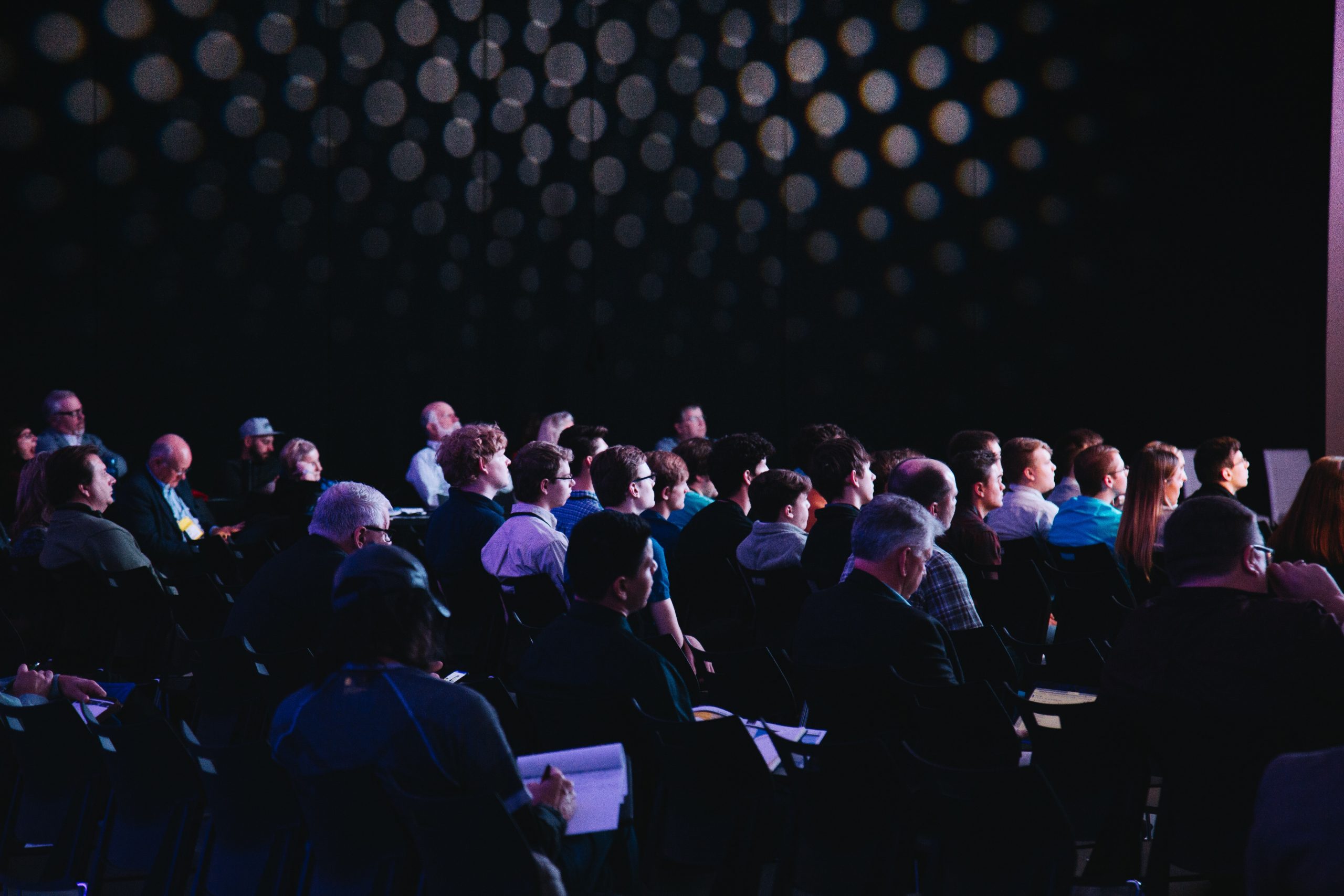
From an audience perspective, it’s how you keep bringing audiences in and ensuring the audience is diverse and eclectic. So they’re representative of a modern Britain, not just based on the postcode you’re operating in and doing that in a way that’s safe and drives engagement. 

What we have found and it was really clear when we did virtual audiences was that you lose the chemistry of the show. Because social interaction is an energy, you’ve seen it in the football or at Wimbledon having a crowd there just changes things, compared to having a load of monitors where you don’t know where to look. Having that energy in the room really steps up the performance of individuals, it also steps up the interactivity and openness and also can affect the crews that are delivering as they feed off the audience too.  

So I think audiences will still be vitally important but it’s also how you integrate them more and more using technology as we go through different evolutions of the pandemic and as we bring live audiences back in. 

Technology will also help transform the interaction and the delivery of content. Technology is always changing, as the pipes get thicker there’ll be an increased ability to create different levels of engagement whether it’s participating live, or watching from home and interacting virtually. 

There’s so much, whether it be the potential to beam people into the studios virtually or use VR but that’s all to come and it’s exciting.”

Every Wednesday we sit down with some of the biggest names in our industry, we dedicate our podcast to the stories of leaders in the technologies industries that bring us closer together. Follow the link here to see some of our latest episodes and don’t forget to subscribe.     

What is the Future of Broadcasting?

On episode 38 of The Tech That Connects Us Podcast John Clifton interviewed Mohammed Akhlaq, Chief Technology Officer, ITN. 

In his storied career, Mohammed played a key role in launching news giant Al Jazeera‘s US studio and channel, so we had to ask such a passionate industry veteran what his thoughts were on the future of broadcasting, and Mohammed’s answer was very interesting. 

What are you most excited about for the future of the broadcasters themselves? 

I think it’s a difficult question to answer, because a lot of broadcasters have legacy infrastructure, workflows, and traditional ways of doing things. Content isn’t produced the same way it was produced 20 years ago, it’s started to change slightly, but that part didn’t change.  

What’s really changed is the distribution of content. Rather than using the UHF transmitters, etc, you now have, streaming platforms, OTT platforms, VOD platforms, content on mobile phones or tablets.  It’s now more accessible, and that’s the area that has really moved forward quite considerably, with more production being the next phase. And we’ll move very quickly into it, into a more agile and more dynamic, scalable workspace.  

And the third phase would be how content is produced. Although that is yet to come, it will come, and it will be a fundamental change to the way that we produce content and consume content. And this probably will be the biggest threat to any broadcaster, because it’s taken away the crown jewels of what they are known for, and what they do really well.  

In the media landscape as a whole, the remote production and distribution elements of it make it much easier as an entry point for new start-ups to come into the market without having baggage of legacy. And therefore, they can be far more reactive, far more agile, far more dynamic, far more forward thinking and can change very quickly based on audience feedback.  

An example of this is eSports. Who would think that eSports would be a spectator event? It’s those niche markets that we’ll see from new startups within the broadcast sector. These areas that tier one broadcasters are just not interested in, because of the demographic or because the audiences are geared towards a particular type of genre programming.  

That’s where the new markets are going to be and it’s going to create some great opportunities for new startups to take advantage of. Because it’s a niche market that the broadcasters are just not interested in, but these guys can actually leverage that growing market. How many times have you seen kids watching YouTube channels? watching someone play Fortnight? Surely it would be more fun you playing it, but actually there’s a market for streaming games. 

Every Wednesday we sit down with some of the biggest names in our industry, we dedicate our podcast to the stories of leaders in the technologies industries that bring us closer together. Follow the link here to see some of our latest episodes and don’t forget to subscribe.     

Augmented Reality and Full 360 are the future of Content

On episode 37 of The Tech That Connects Us Podcast John Clifton interviewed Pedro Bandeira, Vice President Product and New Business, Europe, Deutsche Telekom

A dedicated individual on a professional quest to make the ultimate content experience, Pedro has been at the forefront of most modern time development in the Content & Media industry, so it was only natural to query him on the future of the industry and the consumption of content, something he had very a very clear prediction on: 

Which technologies do you think are going to have the biggest impact on the future of the industry? 

“If we look the medium to long run, 5-7 years. Something that’s not coming anytime soon, but which I am a firm believer in, is augmented reality. So, if you can use your full visual space to not only consume content, but also be able to see in real time additional information associated with that content. If you bring everything together in terms of the full VR & Full 360 experience, you’re going to have a lot of potential for creating something very immersive. 

But it’s not yet here, it still needs to mature, but it’s going to happen. Because the same the same statement that I made regarding the 1990s in the digitalization of video also applies to this.  And when it does happen it will be a great experience in terms of content experience.  

When we take that full 360 VR video alongside augmented information associated with content, it’s going to change the way we fundamentally connect with content, not just personally but as a group; it’s going to offer a whole new way of interacting with content.  

But, before that, we still have a lot to do. It’s really thinking about the 4k market and what’s coming after 4k, it’s still not 100% mass market, it still requires us to push this to our customers as mass market. And I think the most important thing that we need to push is this dream of ‘All content everywhere’. If we can deliver on this vision, in which I can at any time access any content free or paid, (if it is paid, of course I need to pay) but I have the ability to access it from any device at any time.  

If we’re able to deliver on that alongside the right discovery plane on top of it, that’s what users want. They want the ability to find quickly what they want and consume it at any time. And that’s the bridge that we still need to cross in the next five years until we get go to the next level of content interaction with full 360 VR and augmented content experiences.” 

Every Wednesday we sit down with some of the biggest names in our industry, we dedicate our podcast to the stories of leaders in the technologies industries that bring us closer together. Follow the link here to see some of our latest episodes and don’t forget to subscribe.    

The Future of Content is AI & Metadata

On Episode 31 of The Tech That Connects Us John Clifton and Will Trenchard sat down with the passionate Matt Westrup, VP Technology & Operation, A+E Networks UK and really delved deep into content, metadata, 5G and much more.  

A particular section of the conversion caught our attention as Matt expressed some interesting thoughts on the future and opportunities in the industry, especially when it comes to content and streaming, we caught that little soundbite and did a small write up, read more below: 

What do you think the future holds for the technology and consumer experience? 

I think AI and metadata will be the future. The idea of discoverability and personalization will become ever more a focus and will evolve very quickly, giving the chance for the consumption of content to feedback into the production of content, which is quite an interesting idea, and something people are going to have to find a balance around is creativity versus insights.  

5G is another future for consumer experience, this technology suddenly gives the consumer a whole different experience, especially with streaming and mobile use. These are the two technologies that will absolutely make a commercial difference. 

And where do you see the greatest opportunities in terms of the service? 

The ability to with confidence deliver content to a mass of people with the knowledge that they will absolutely love it and they’re appreciative that it ended up with them will be a big opportunity in the industry. But also, the different ways of partnering for distributions, the traditional lines of the ‘supply chain’ are being smashed, rebuilt and rerouted. And this change causes an initial lack of certainty on where your audience are on the supply chain, which is a big opportunity to innovate. 

And when it comes to the younger demographic, thoughts of short form video and gaming come to mind, do you think this has a role to play? 

Totally. And going back to metadata and AI, there are all sorts of businesses that are constantly producing new content, and that’s going to be having to be thought of very differently for those platforms, to be relevant, because we know the competition is there.  

But also, these extraordinary archives that many, many companies assessing how to we surface the data to be able to understand what value that could have? And what imagination can we apply to that to create something new out of it? So really there’s two kind of dynamics going on there. 

Every Wednesday we sit down with some of the biggest names in our industry, we dedicate our podcast to the stories of leaders in the technologies industries that bring us closer together. Follow the link here to see some of our latest episodes and don’t forget to subscribe.